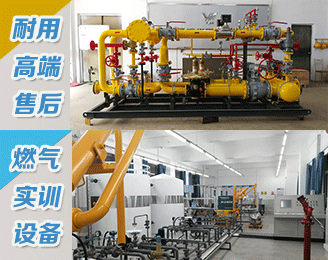
As a key equipment in natural gas transmission and distribution systems, CNG pressure regulating devices play a crucial role in gradually reducing high-pressure natural gas to safe and stable low-pressure levels to meet various user needs. The main components and their functions are as follows:
- Pressure Regulator (Core Component)
- Function: Regulates outlet pressure through mechanical or electronic means to ensure pressure stability within the set range.
- Types:
- Direct-acting regulator: Suitable for low-flow, low-pressure scenarios (e.g., residential buildings).
- Pilot-operated regulator: Suitable for high-flow, high-pressure scenarios (e.g., regional regulating stations).
- Key points: The sensitivity and reliability of the regulator directly affect gas supply quality.
- Filters
- Function: Remove solid particles, moisture, oil contaminants, and other impurities from natural gas to prevent wear or blockage of regulators, valves, and other components.
- Types:
- Primary filter: Filters large particle impurities.
- Precision filter: Filters微小 particles and liquid impurities.
- Maintenance: Requires regular cleaning or filter element replacement to ensure filtration effectiveness.
- Safety Valves
- Function: Automatically release pressure when outlet pressure exceeds the set value to prevent equipment damage or explosion.
- Types:
- Spring-loaded safety valve: Controls opening pressure through spring force.
- Pilot-operated safety valve: Suitable for high-pressure, high-flow scenarios.
- Calibration: Requires regular calibration of opening pressure to ensure safety and reliability.
- Shutdown Valves
- Function: Automatically cut off the gas supply in emergency situations such as overpressure, underpressure, or fire to ensure safety.
- Types:
- Mechanical shutdown valve: Triggered by pressure changes.
- Electric/pneumatic shutdown valve: Can be controlled by remote signals.
- Interlocking: Often linked with pressure sensors and fire alarm systems.
- Pressure Gauges and Flow Meters
- Pressure gauge: Monitors inlet and outlet pressure in real-time to ensure proper regulator operation.
- Flow meter: Measures natural gas flow rate for metering and monitoring purposes.
- Types:
- Mechanical pressure gauge: Simple and reliable, but requires manual reading.
- Electronic pressure gauge/flow meter: Enables remote data transmission and automated management.
- Heating Devices (Optional)
- Function: Prevent pressure anomalies in natural gas due to low temperatures (e.g., pressure drop caused by the Joule-Thomson effect) in cold environments.
- Types:
- Electric heater: Suitable for low-flow scenarios.
- Water bath heater: Suitable for high-flow, high-pressure scenarios.
- Application scenarios: Cold northern regions or CNG filling stations.
- Inlet/Outlet Valves and Piping
- Function: Control the flow of natural gas for easy maintenance and repair.
- Types:
- Ball valve: Good sealing performance and easy operation.
- Gate valve: Suitable for large-diameter pipelines.
- Connection methods: Flange connection, welded connection, etc.
- Control System (Optional)
- Function: Achieve automated monitoring and management to improve safety and efficiency.
- Components:
- PLC controller: Collects real-time pressure and flow data to control regulators and valves.
- SCADA system: Provides remote monitoring and scheduling for large regulating stations.
- Advantages: Reduce manual intervention and improve response speed.
Summary:
The core components of CNG pressure regulating devices include regulators, filters, safety valves, shutdown valves, pressure gauges, and flow meters. Other components such as heating devices, inlet/outlet valves, and control systems are optional based on specific requirements.
- Key point: All components must work together to ensure stable, safe, and reliable natural gas pressure.
- Maintenance focus: Regularly check the regulator's sensitivity, filter cleanliness, and the functionality of safety valves and shutdown valves to ensure long-term stable operation.
Through proper design and maintenance, CNG pressure regulating devices can effectively guarantee the safety and stability of natural gas supply.